For thirty years distance didn’t matter, because the Ohio part cost more. Labor decided everything.
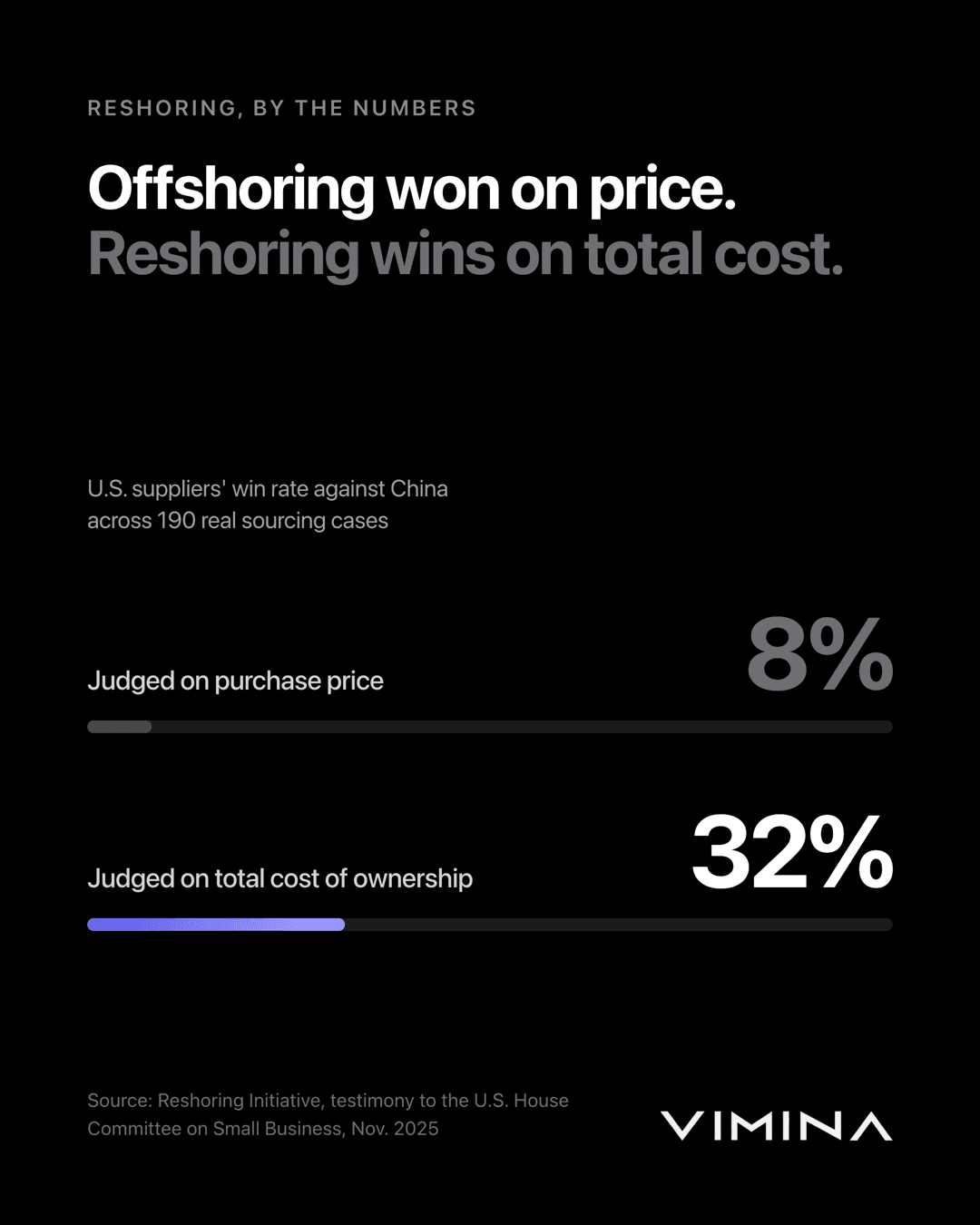
When you count the full cost of a part (freight, inventory sitting at sea, quality escapes, tariffs), U.S. suppliers win 32% of head-to-head sourcing cases against China. On sticker price alone, they win 8%. That is from the Reshoring Initiative’s study of 190 real cases.
What still holds U.S. plants back is productivity, which has barely moved in 15 years.
Most of that cost isn’t on the machines. It’s in the hours around them: a quote that takes two days, a schedule rebuilt by hand every time a machine goes down, inspection reports typed up after the shift, maintenance that waits for a breakdown. AI takes those hours out. The cost per part drops without anyone working faster.
And once the cost gap closes, distance switches sides. Being close to your customer stops being something you pay for and becomes the reason they buy from you: shorter lead times, less money tied up in transit, design changes made this week instead of next quarter.
Making it here is becoming a logistics advantage. AI is how a plant gets its costs low enough to use it.
Sources: Reshoring Initiative; Harry Moser, testimony to the U.S. House Committee on Small Business, Nov. 2025.